Integrating a piece of Arabic calligraphy into an interior is a gesture that goes beyond simple decoration. Each artwork carries an aesthetic, cultural, and sometimes spiritual weight that deserves respect. However, certain recurring mistakes disrupt the harmony of the final result. This article highlights the main errors to avoid when decorating with Arabic calligraphy — whether regarding the choice of style, positioning, or color coherence. A thoughtful approach transforms a simple acquisition into a true dialogue between the space and the script.
Understand what you are hanging before decorating
According to UNESCO, Arabic calligraphy is defined as “the artistic practice of handwriting Arabic script in a fluid manner to convey harmony, grace and beauty”. It is not just another graphic pattern. It is a codified discipline, rich with meaning.
Some artworks feature formulas such as the Bismillah or the ninety-nine names of Allah. According to Islamic tradition, these texts maintain a close connection between calligraphic art and faith. Ignorance of what you are hanging leads to unintended clumsy choices, or even faux pas that are difficult to correct after the fact.
The first mistake to avoid, therefore, is treating calligraphy as a neutral poster. Taking the time to understand the written text shapes all the decisions that follow.
What are the 10 home decor mistakes to avoid with Arabic calligraphy?
The question comes up often: what are the 10 home decor mistakes to avoid when integrating Arabic calligraphy into an interior? We have selected the most frequent and impactful ones.
- Hanging the artwork too low, at foot or floor level.
- Placing calligraphy in immediate proximity to restrooms.
- Choosing colors that clash with the room's palette.
- Opting for a calligraphic style unsuited to the decor's atmosphere.
- Overcrowding a wall already cluttered with other visual elements.
- Ignoring the meaning of the written text.
- Mixing multiple calligraphic styles without coherence.
- Neglecting the size: an artwork that is too small gets lost, too large it overwhelms.
- Using a frame that competes with the artwork itself.
- Placing the calligraphy in a transitional space without a natural focal point.
These mistakes share a common origin: a lack of prior reflection on the nature of the object and its environment.
Positioning, a matter of respect as much as aesthetics
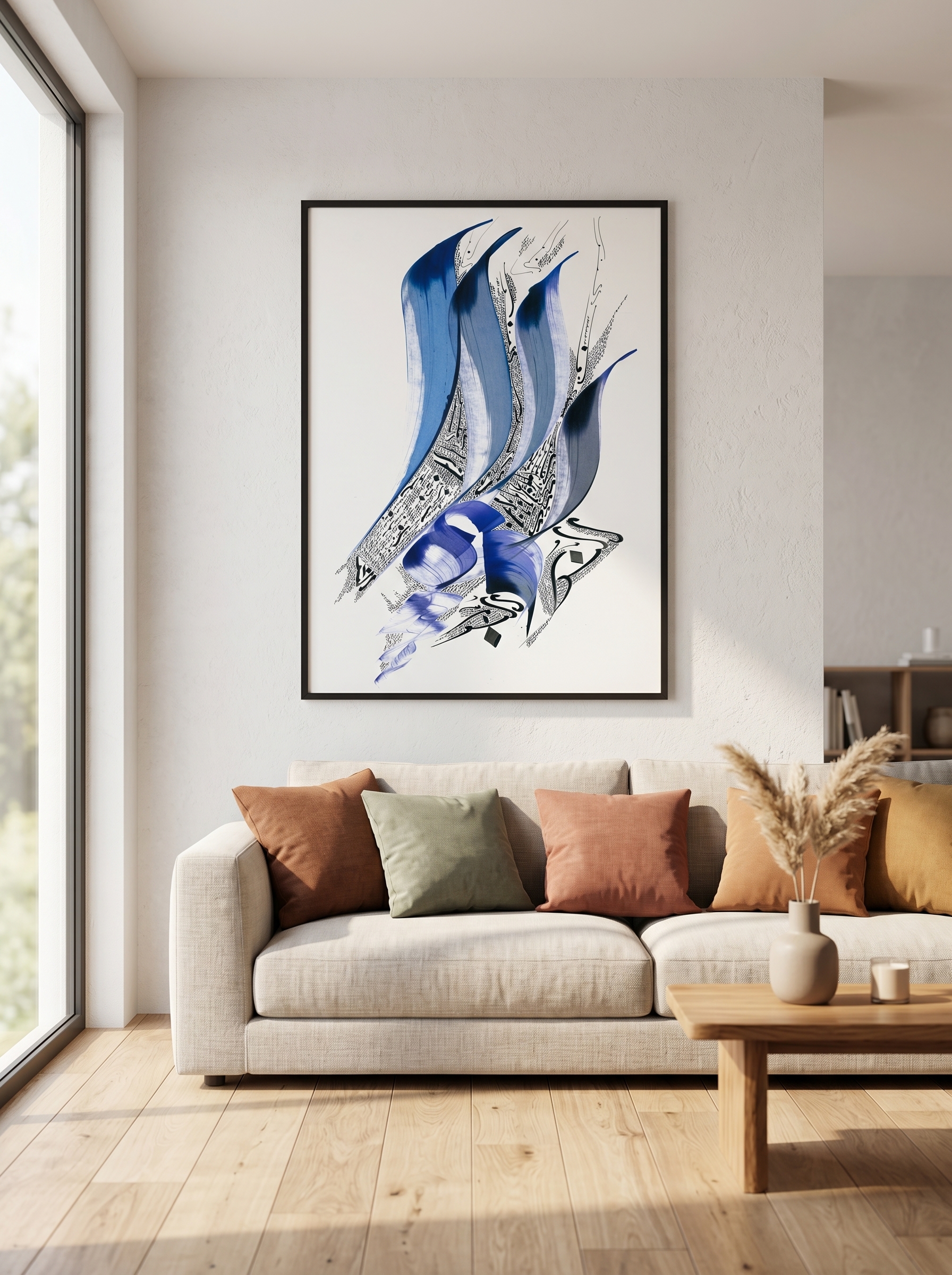
Beyond aesthetics, the positioning of Islamic calligraphy obeys precise cultural considerations. It is generally recommended to hang it at eye level, on an uncluttered wall, away from the floor and restroom areas.
This recommendation is not arbitrary. Out of respect for the sacred nature of the texts represented, spaces near bathrooms are to be avoided. Islamic tradition accords a special dignity to written formulas and verses, which naturally reflects in their physical placement.
A cluttered wall also poses a problem. Calligraphy needs room to breathe. Placing it in a visually saturated environment cancels out its effect.
Color coherence and choice of style: two often-linked mistakes
A calligraphy piece whose colors clash with the surrounding decor can break the visual harmony of the room. This mistake is common when the purchase precedes reflection on the receiving environment.
The choice of calligraphic style is equally decisive. A classic interior will harmonize better with traditional scripts like thuluth or Kufic. A contemporary setting calls instead for cleaner shapes, like diwani or naskh in their modern versions.
These two parameters, color and style, must be thought out together. A beautiful artwork in an unsuitable context loses much of its impact.
The question of Quranic verses on walls
One point deserves special attention. According to several Muslim jurists, writing Quranic verses directly onto walls is considered a practice not verified among the pious predecessors. Some call it a blameworthy innovation, others disapprove of it without going as far as a formal prohibition. The issue remains debated within legal schools.
For a decorator mindful of coherence, this means that a framed artwork on paper or canvas is generally preferable to a direct wall inscription. This approach respects both religious sensitivities and the practical constraints of an evolving interior.
In traditional Islamic architecture, calligraphy was conceived as a vessel of meaning, not as an ornament. Transposing this heritage into a contemporary interior therefore requires reflection on both form and substance.
Decorating accurately: a few guidelines to avoid faux pas
Decorating with Arabic calligraphy does not require special erudition. It simply demands attention to meaning, space, and visual coherence. The most common mistakes (poor positioning, color dissonance, mismatched style) are easily corrected once identified.
Understanding what you are hanging, choosing a style adapted to your interior, respecting the practices related to the sacred nature of certain texts: these three reflexes are enough to transform a decorative approach into an informed choice. Arabic calligraphy, when well integrated, enriches a space with a depth that few other art forms can offer.
The next step often involves choosing between an original artwork and a high-quality reproduction. This choice, too, deserves to be approached methodically.